Research
We develop theory, algorithms and microscopy systems that couple X-ray and electron imaging with AI for advanced materials characterization.
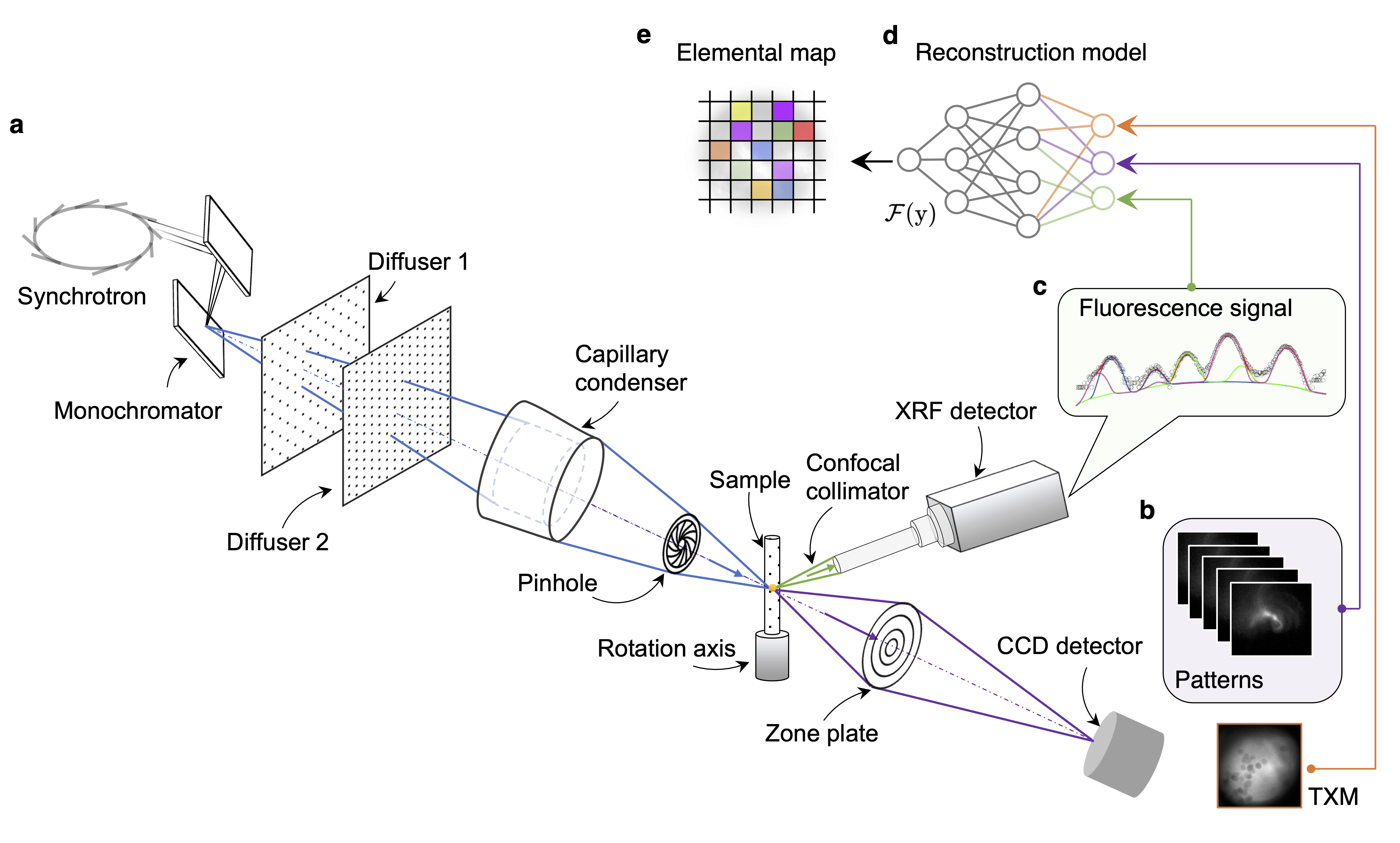
Computational X-ray Microscopy
We build AI-driven pipelines for X-ray ptychography, tomography, spectro-tomography, and laminography. The goal is quantitative structure and chemistry from incomplete, noisy, or probe-unknown measurements — from synchrotron beamlines to in-device experiments.
Selected papers
- Learning neural representations for X-ray ptychography reconstruction with unknown probes
- LamiGauss: Pitching Radiative Gaussian for Sparse-View X-Ray Laminography Reconstruction
- Data-driven deformation correction in X-ray spectro-tomography with implicit neural networks
- Machine-and-data intelligence for synchrotron science
- Nanoscale chemical imaging with structured X-ray illumination
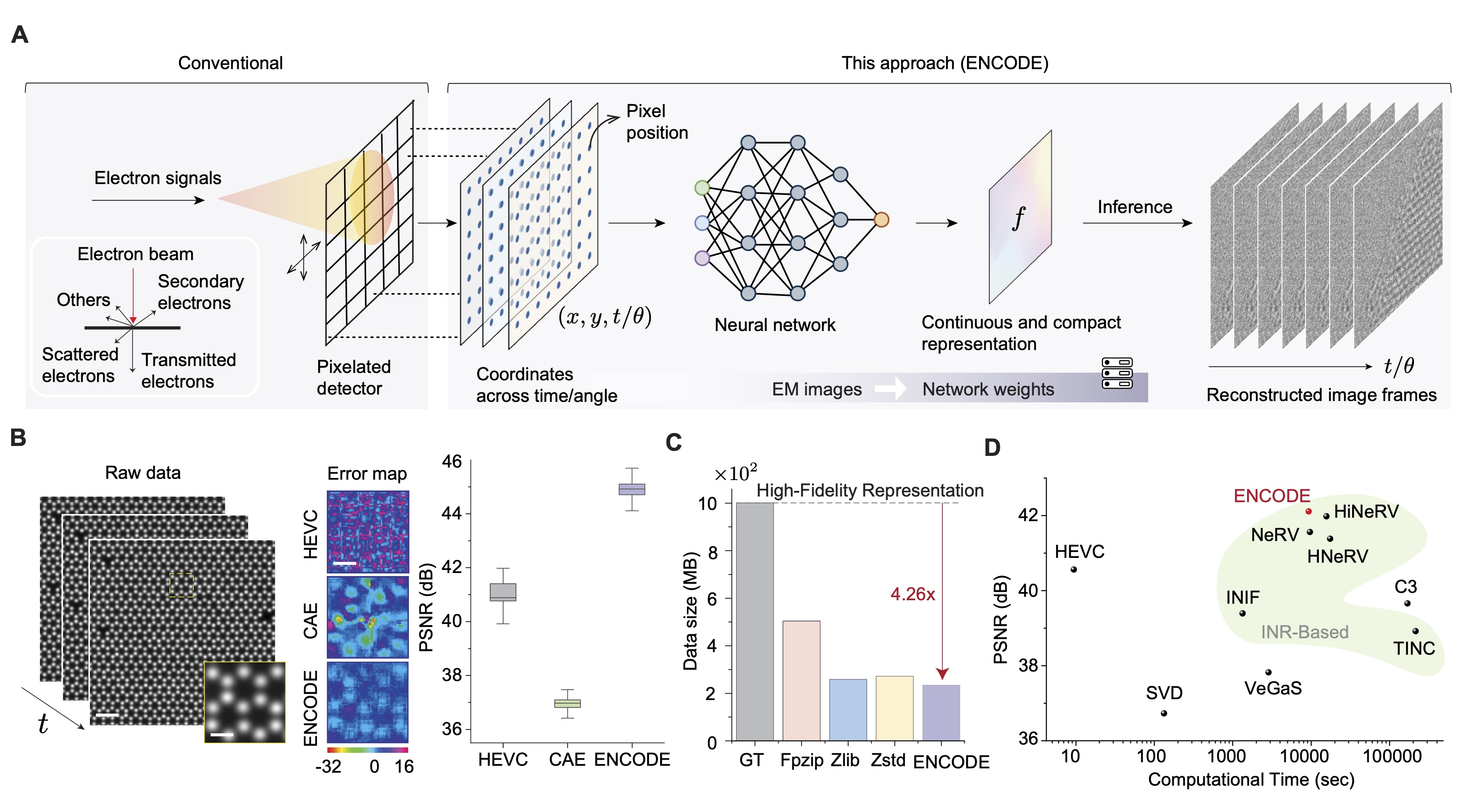
Computational Electron Microscopy
We also push the imaging and analysis limits of electron microscopy. Continuous neural representations and learning-based reconstruction turn large, noisy, or incomplete EM measurements into compact, high-fidelity structure — from scalable data representation to quantitative microstructure recovery.
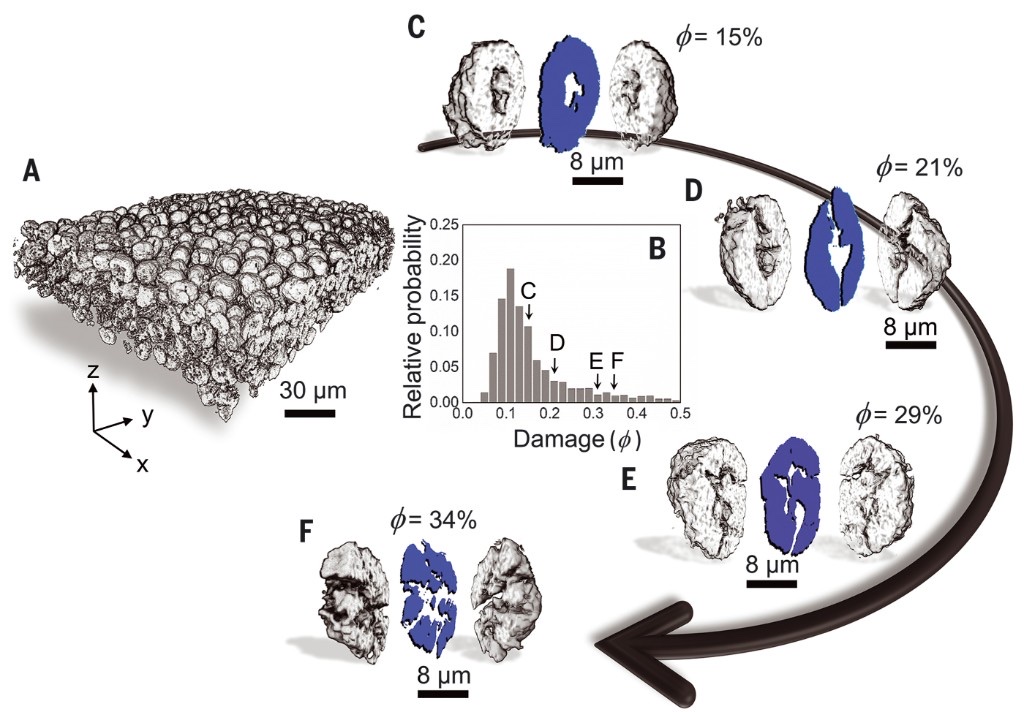
AI for Battery Science
We use computational microscopy for distinctive battery characterization, revealing otherwise invisible structure and dynamics—especially during operando experiments—for failure analysis, cathode microstructure, particle networks, and explainable models of thermochemistry and degradation.
Selected papers
- Dynamics of particle network in composite battery cathodes
- In-device Battery Failure Analysis
- Additive engineering for robust interphases to stabilize high-Ni layered structures at ultra-high voltage of 4.8 V
- Multiphase, Multiscale Chemomechanics at Extreme Low Temperatures: Battery Electrodes for Operation in a Wide Temperature Range
- Probing lattice defects in crystalline battery cathode using hard X-ray nanoprobe with data-driven modeling
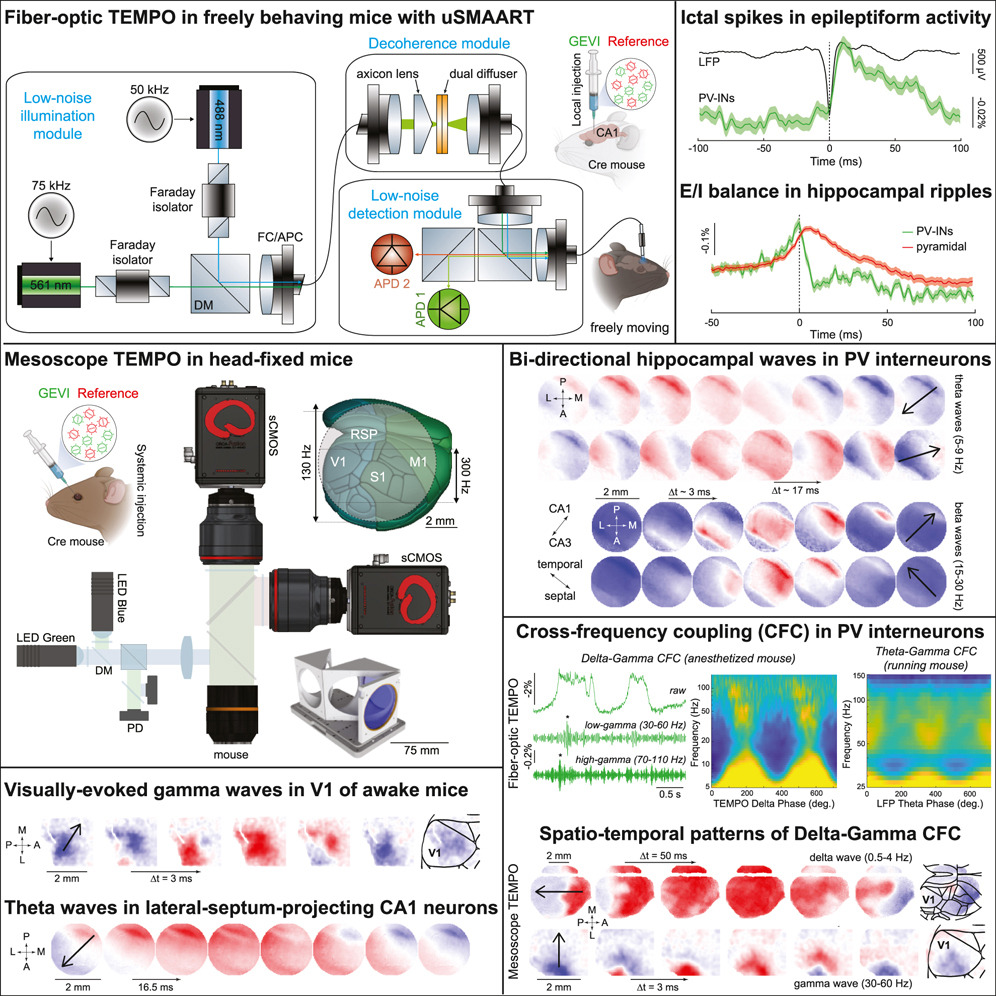
Inverse Problem for Imaging
Across modalities, we treat imaging as an inverse problem: denoising, phase retrieval, probe recovery, sparse-view tomography, and neural representations. Methods developed here transfer between X-ray, electron, optical microscopy and related imaging systems.
Selected papers
- PURE-LET Image Deconvolution
- AIFNet: All-in-Focus Image Restoration Network Using a Light Field-Based Dataset
- Unbiased Risk Estimation for Multiplicative Noise Removal
- Unbiased and Nonlocal Linear Regression for Video Denoising under Multiplicative Noise
- Imaging high-frequency voltage dynamics in multiple neuron classes of behaving mammals